

NCG Top 100s: The Happiness Edition
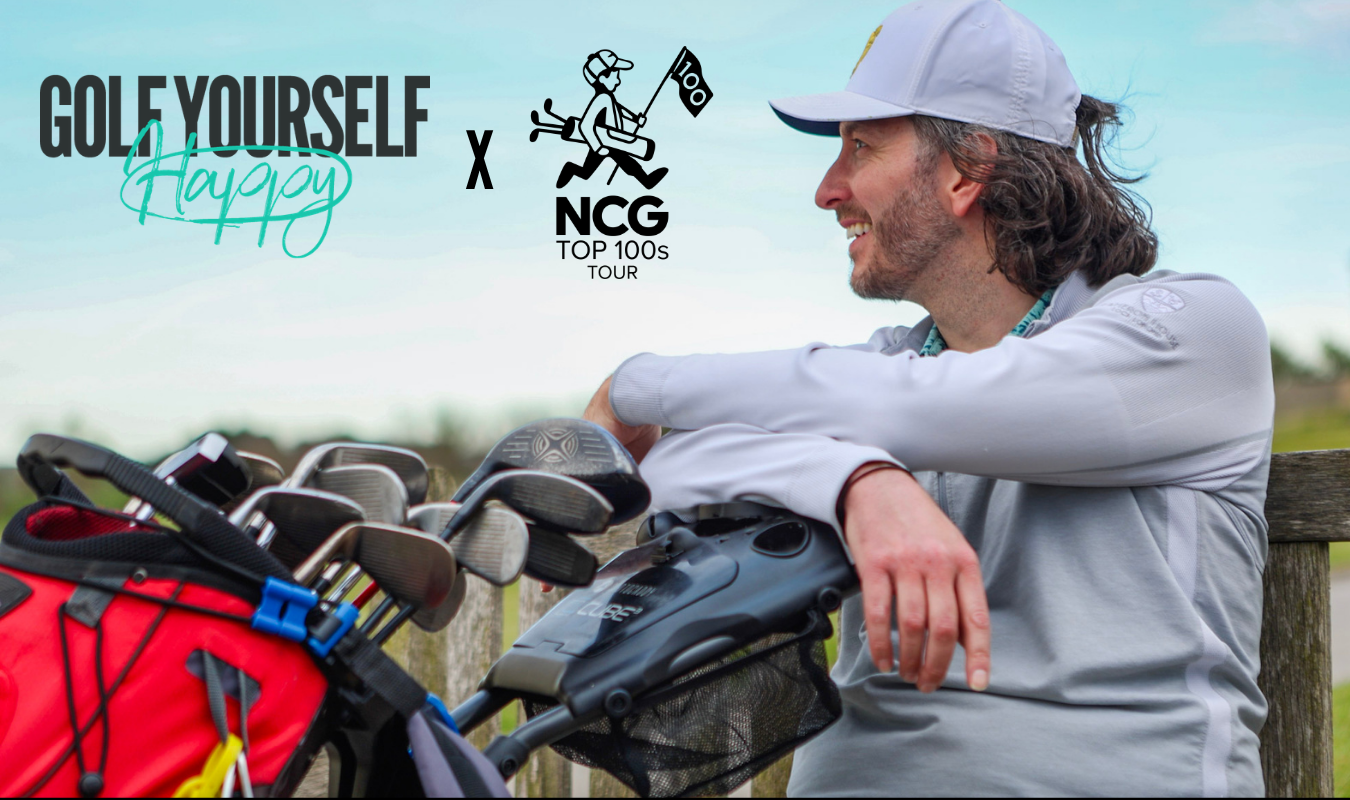
Here I am, looking chuffed, after carding 20 points on my NCG Top 100s debut
Back in January, a rather exciting email landed in my inbox. I clearly recall being sat at a hotel breakfast buffet in Orlando, Florida - surrounded by my daughter, nephew and niece who were buzzing to meet Mickey and Minnie Mouse - when my imagination was instead captured by the invitation to become an ambassador for the National Club Golfer Top 100s Tour.
The opportunity to play some of the UK’s finest courses - and add to my UK Top 100 logo golf ball collection at the same time - seemed too good an opportunity to pass up…even if the prospect of doing so filled me not only with excitement, but also with anxiety and nerves.
The brochure for the NCG Top 100s Tour which accompanied my ambassador invitation made clear several points. The items which especially caught my attention were:
The events were competitive in nature
The maximum handicap for participants was 24.0 WHS
The NCG Top 100s Panel consists of 4 people, all of whom have handicaps ranging from scratch to 5
For me, that is a potent cocktail of factors which would normally send me into a tailspin. Competitive golf typically causes me to become very tense - before, during and after the event - to the extent that you would watch me play and swear blind I’ve never swung a club before.
With my own handicap sitting at 20.7 WHS (and having remained there for several years due to a lack of playing time and handicap qualifying golf), I have long carried a degree of embarrassment around the number. So, to note that I was eligible for these events - but only by a hair’s breadth - instantly fanned the flames of my existing insecurity.
Then, to see that those running the events were all low single-figure players led me to incorrectly assume that these events were really intended for the very best amateur golfers in the country.
Despite my reservations, I gladly accepted the invitation. After all, it is my long-held belief that we must all seek to take ourselves outside of our comfort zone from time to time…provided the conditions are right.
Upon reviewing the event schedule, I was confirmed to play at three events this year, beginning with Royal North Devon in April, followed by Edgbaston in May and culminating with Ashburnham in September.
What I didn’t realise at the time was that these events were about to challenge several assumptions I held not only about competitive golf… but also about belonging, comparison and happiness itself.
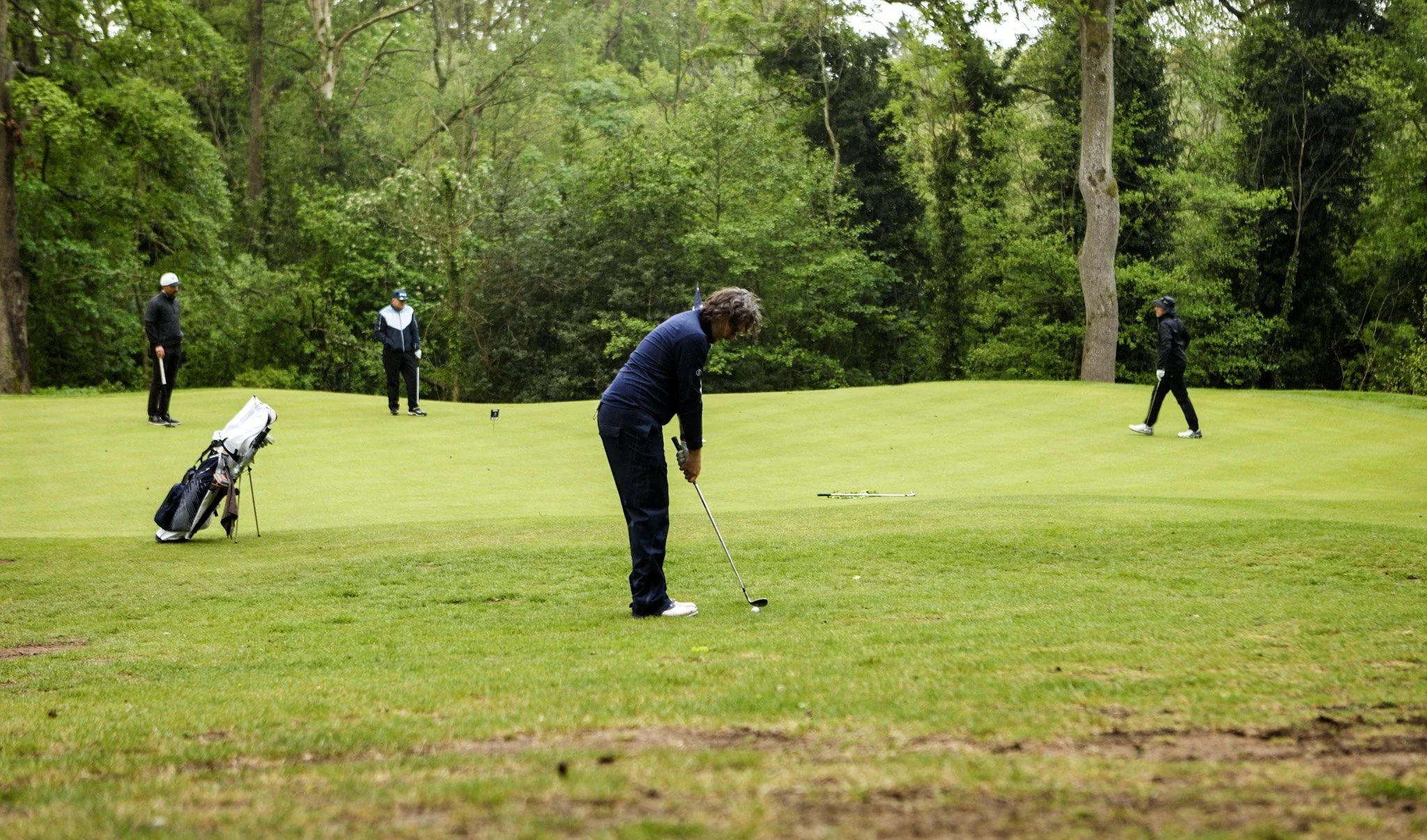
My 4th shot on a Par 3, after knifed my tee shot through the green and then chipping off the green from the drop zone!
Lesson 1: Belonging
Before arriving at Edgbaston, I made the mistake of checking the handicaps of my playing partners on the event app.
Big mistake.
The group consisted of a two handicapper, a six handicapper and a nine handicapper. I was the only player in the group playing off twenty-something.
Instantly, the stories started.
“They’re all much better than me.”
“I’m going to embarrass myself.”
“I don’t belong here.”
What was fascinating, however, was that none of those thoughts were actually coming from the other players. They were coming from me.
In reality, my playing partners were perfectly pleasant, welcoming and encouraging throughout the day. Nobody questioned my right to be there. Nobody mocked my golf. Nobody seemed remotely concerned about my handicap.
In fact, by the end of the round, one of the best golfers in the group had expressed an interest in my coaching work.
That alone forced me to confront something uncomfortable: the only person questioning whether I belonged there was me.
I suspect many average golfers know this feeling intimately. The first tee. The strangers in your group. The low handicaps. The fear of slowing people down. The worry that everyone is silently judging you.
But my experience at these events has increasingly led me to believe that most golfers are far too preoccupied with their own game to spend much time worrying about yours.
Indeed, perhaps that is one of the great liberating truths of golf…

Absolutely no idea what I’m pointing at here
Lesson 2: Comparison
There is no doubt in my mind that competitive golf changes the emotional experience of the game.
At Royal North Devon, I experienced first tee nerves so intense that after watching all three of my playing partners stripe their drives down the middle, I proceeded to pull my own drive left, take an unplayable, top the next shot and effectively destroy the hole before I’d even settled into the round.
Competitive golf does strange things to me mentally.
It narrows my focus. It increases tension. It pulls me away from instinct and into overthinking.
And comparison only amplifies that process.
Watching better golfers hit impressive shots can very quickly trigger the feeling that you are somehow deficient by comparison. Yet what surprised me most at Edgbaston was not how good the single-figure golfers were, but how human they were.
They hit poor shots.
They got frustrated.
They made mistakes.
They struggled.
Of course they were better players than me overall - their handicaps confirmed that - but they were still imperfect golfers navigating the same emotional game the rest of us are.
That perspective helped soften some of my own self-judgement.
Comparison may well be the thief of joy, but perhaps perspective is the thing that steals some of comparison’s power back.
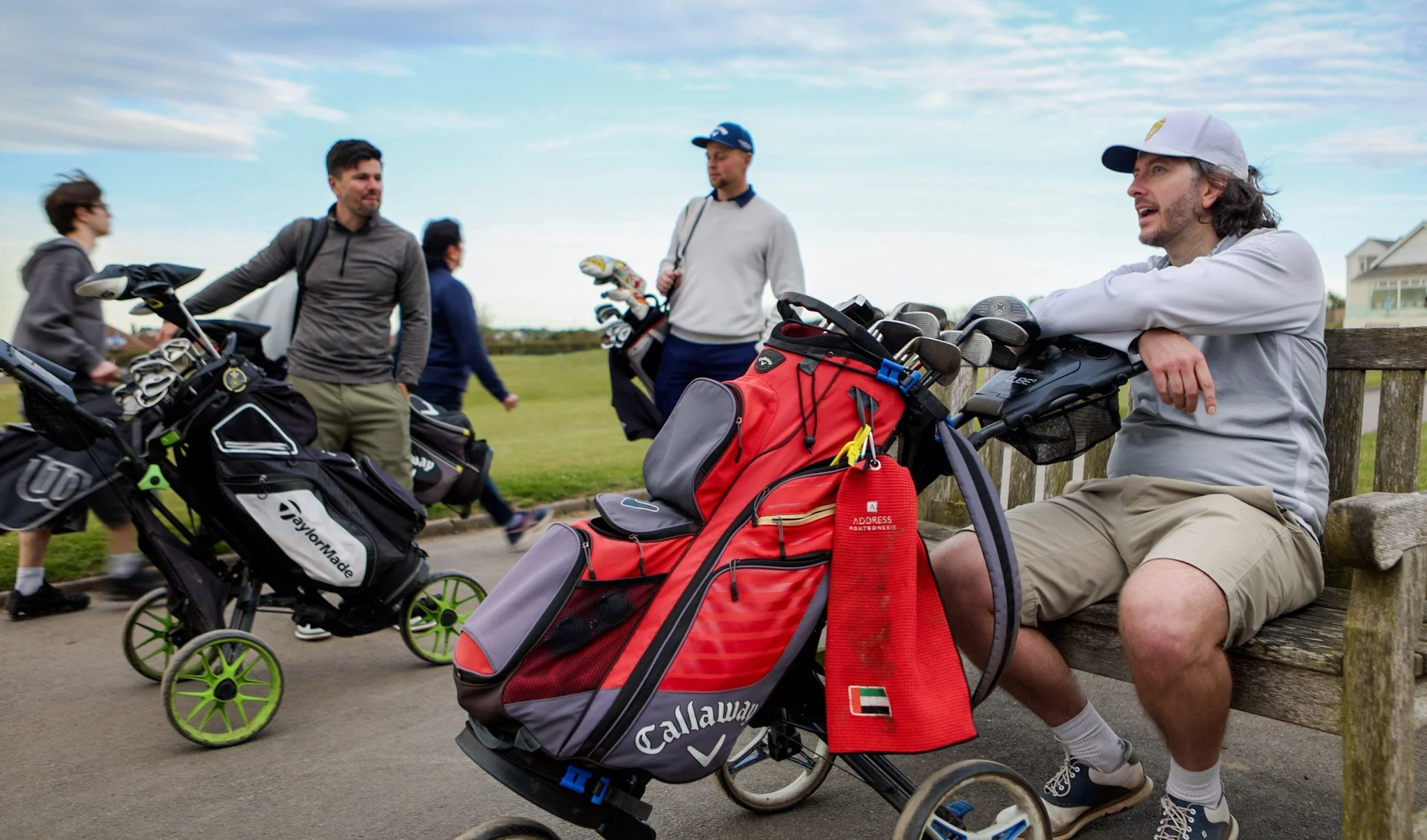
Chatting with a few members at Royal North Devon
Lesson 3: Different Golfers Seek Different Things
One of the most unexpectedly enjoyable aspects of the NCG events has been meeting golfers with completely different motivations for taking part.
At Royal North Devon, one of my playing partners explained that he was only a handful of events away from completing the entire NCG Top 100 circuit.
I found that fascinating.
Whilst, of course, he wanted to play well, his deeper motivation appeared to be rooted in experience, memory-making and the satisfaction of completing the journey itself.
In Scotland, we often talk about “Munro bagging” - the pursuit of climbing all mountains over 3,000 feet.
This felt remarkably similar.
He wasn’t simply chasing scores.
He was collecting experiences.
At the same time, another golfer explained that he had recently been feeling burnt out through work and life stress, and had decided to travel the country in his camper van playing multiple NCG events as a form of personal reset.
Then at Edgbaston, I played alongside an exceptionally talented two handicapper whose motivation was entirely different again. For him, the pursuit of mastery and high-level performance was clearly a major source of fulfilment.
And I think that is what struck me most.
I arrived assuming everyone was there for the same reason: competition.
Instead, I discovered that golfers were seeking all sorts of different things:
challenge
connection
recovery
achievement
memory
beauty
growth
belonging
It made me realise that happiness in golf is not one-size-fits-all.

Testing out my new Meta Raybans at Edgbaston!
Conclusion: What This Means For Ordinary Golfers
For many years, I have subconsciously believed that experiences like this belonged primarily to “proper golfers” - low handicappers, elite amateurs and highly competent players.
What these events have shown me is that ordinary golfers belong in extraordinary places too.
You do not need to be scratch to enjoy a Top 100 golf course.
You do not need to shoot level par to deserve the experience.
And you certainly do not need to become a perfect golfer before allowing yourself to feel a sense of belonging within the game.
In many ways, these events have reminded me that golf is not simply about scorecards and handicaps.
It is about people.
Experience.
Connection.
Challenge.
Memory.
And perhaps most importantly, acceptance.
Because the more I have reflected on my experiences at Royal North Devon and Edgbaston, the more I have come to believe that the golfers who enjoy the game most are not necessarily the most talented golfers…
They are the golfers who stop waiting for permission to belong.
Want to explore these ideas further?
🎧 Listen to the full NCG Top 100s podcast mini-series
📩 Subscribe to the Golf Yourself Happy newsletter
📱 Follow Golf Yourself Happy for more reflections on mindset, acceptance and happier golf